



When planning a trip to Chile, don't be tempted to try to do everything.
Chileans love to tell a story about their country. About God really. They say that when she'd finished making the world, she felt in her pockets for all the leftover bits and threw them out on the ground - to make Chile. A bit of desert, some ocean, high mountains, volcanoes, glaciers, forests, islands, fertile river valleys...it's got the lot.

Conveniently, God decided to make Chile linear. You'll know this because every single travel company starts their description of the place not with the wonderful people who live there, not even the spectacular nature, but with a statistic about how bloody long it is.
Exploring the country's glorious diversity is simple - you either go south, or you go north. The entrance door (Santiago) is in the middle. There's remarkably little east-west action to consider, literal and metaphorical, Rapa Nui excepted, which makes it an absolute treasure for travel companies - you can create a two-week trip with pictures of cities, deserts, volcanoes, lakes, glaciers and mountains, all with a side order of llamas, condors and wine.


Chile, where less is more
Just because you can, doesn't mean you should.
Here's why.
Let's assume you're UK-based and looking at a fairly typical two-week 'highlights of Chile' trip - Santiago + Atacama + Lake District + Torres del Paine. How long is spent in transit versus actually in place? Conservatively, 74 hours is spent going to or from airports or in the air. That's 20% of the entire fortnight. More strikingly, four actual days of daylight are spent more or less fully in transit, leaving you (typically) just two days in each of the places you probably most want to see.
Lots of boxes ticked, few locals met, little flavour or sense of place absorbed. From where we stand, this pace of holiday does Chile a great disservice.
Choose instead to slow the map right down and give your time to one or two regions. Nowhere more rewarding than the Carretera Austral – Pinochet-era engineering turned wilderness lifeline – where days unfold along rivers, fjords and forests, and the country's southern soul has time to reveal itself. Here, staying put isn't a compromise, it's a gain: fewer miles, deeper conversations, and a Chile that feels lived in rather than glanced at.
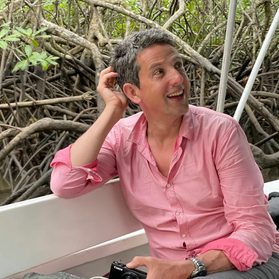
Thomas Power
Founder of Pura Aventura
Thomas has run a café in northern Mexico, lived on a Honduran island, guided tours in Spain, and worked for the UN in Santiago. He founded Pura Aventura in 1999 with a debt of gratitude for the beautiful landscapes and warm hospitality he encountered in Patagonia, hitchhiking the Carretera Austral years before. He was determined to share these places, however unknown they were at the time. Since then, he and the team have expanded the destinations offered, but have always stuck to their "inch-wide, mile-deep" approach: great holidays booked directly with local hosts, guides and owners, no intermediaries, just intimate expertise translated into trips designed to protect and benefit the places and people they send travellers to.


