



Y Wladfa: The story of Argentina's unlikely Welsh heart
How far would you go to escape the English?
For the Welsh of the mid-19th century, the answer was about 7,500 miles. Facing the twin pressures of industrialisation and English cultural dominance, a group of determined Welsh people decided that preserving their language and identity required something rather more dramatic than a petition to Parliament.
Led by Michael D. Jones, a Congregationalist minister with a vision, the idea took hold: establish a Welsh settlement somewhere so remote that their culture could flourish undisturbed. The Argentine government, keen to populate the vast emptiness of Patagonia, offered land grants and assistance. A deal was struck.

The Voyage of the Mimosa
In 1865, around 150 settlers boarded the Mimosa and set sail into the unknown. The journey was everything you'd expect of 19th-century Atlantic crossings—rough seas, cramped quarters, and the gnawing uncertainty of what awaited them. Their destination: an uncharted stretch of Patagonian wilderness they'd never seen and could barely imagine.
After months at sea, they arrived and established Y Wladfa (The Colony) in the Chubut Valley. The challenges were immense. Harsh climate. Profound isolation. Utterly unfamiliar terrain. But they stayed.

Against the Odds
What followed was remarkable.
The settlers built farms, schools, and a close-knit community that stubbornly maintained its Welsh language, music, and customs. They introduced new agricultural techniques and, crucially, cultivated something more than crops—they cultivated continuity.
One aspect of this story deserves particular attention: the relationship between the Welsh settlers and the Tehuelche people. Initial encounters could easily have gone badly—cultural differences, language barriers, mutual suspicion. Instead, accounts suggest something rather different. The Tehuelche, with their deep knowledge of Patagonian survival, helped the newcomers navigate the terrain, find water, and adapt to conditions that would otherwise have defeated them. Both groups exchanged knowledge about food sources and coping strategies for the extreme climate. It wasn't utopia, but it was cooperation.

"Have you seen the fire-breathing dragon yet?"
Towns like Trelew, Gaiman, and Trevelin became the anchors of this Welsh-Patagonian world. The latter has since gone 'full Wales' with a dragon which breathes fire on the hour. All the signs are in Welsh, Spanish and the indigenous language. The tea house is the centre of the social sphere.
The Trevelin Valley beyond transformed into thriving agricultural land - farms, orchards, gardens - that sustained the community while deepening its connection between old heritage and new home. It now was three wineries, something no one would have predicted all those years ago.


Today, the descendants of Y Wladfa have integrated into Argentine society while proudly retaining their distinct identity. The Welsh language is still spoken. Eisteddfod festivals still take place. Chapels still stand. It's not a museum piece—it's a living culture, shaped by both Wales and Patagonia.
The story of these settlers is one of resilience and quiet determination. They ventured into the unknown and built something that endured. Nearly 160 years later, their legacy remains.
Visit Wales
Unless you are Welsh, you can be forgiven for not wanting to turn your whole trip over to this bit of its story. But honestly, it is fascinating and sits right between the Lake District, the guanaco herds of the steppe and one of the world's most surprising wine valleys. It's a chapter of a rich and varied story.
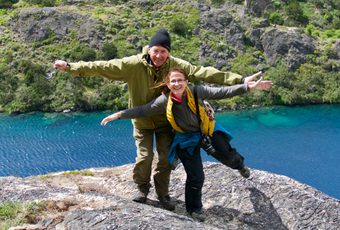
So come to northern Patagonia with us and you'll have the chance to explore this history properly - not from a distance, but through conversations, tea houses and landscapes that still carry the imprint of those first arrivals. Your guide, Gwion, is Welsh himself. Obviously. He originally came here with his wife, who was invited to come over and teach Welsh in the local school. So Gwion knows this story from both sides.
Throw in the fire-breathing dragon and what more could you ask for?


